This page was translated automatically. The German original is binding. Read the German original
In total, in 2020 we were able to help 159 children and single parents suffering from illnesses or health threats:
- Six children with hydrocephalus underwent surgery in Ghana and Madagascar.
- Four children with tumours were treated in Ghana and Madagascar.
- Two children with heart conditions underwent surgery in Kenya and Madagascar.
- 200 COVID-19 aid parcels provided food, hygiene products and clothing for 50 children in an orphanage in Brazil for four months.
- A child and a single father in Ghana were treated for bone deformities and fractures respectively.
- Five children in Madagascar and a single mother in Ghana received treatment for conditions affecting the liver, lungs and other organs.
- We enabled three premature babies in Madagascar to receive the necessary treatment in the intensive care unit.
- A total of 86 caesarean sections were made possible for expectant mothers in critical situations in Madagascar.
As figures often do not tell the whole story, we would like to use four examples to show just how much our aid efforts can save or change lives, and how grateful we are for the donations received, without which we would not have been able to provide this support last year:
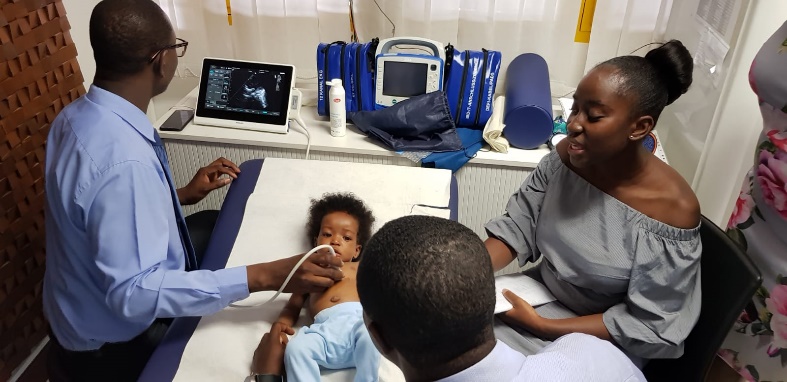
Phoebe, aged 1.5 years, in Ghana had suffered since birth from a rare, difficult-to-treat and life-threatening heart defect: the so-called patent ductus arteriosus (PDA). This duct forms a connection between the aorta and the pulmonary artery in the unborn child. Because the foetus in the womb is still supplied with oxygen-rich blood by its mother and does not breathe independently, this duct serves to divert the blood largely past the pulmonary circulation. It is only after birth, when the newborn begins to breathe independently, that the lungs expand. As a result, they can be supplied with blood normally, and the baby’s body begins to supply itself with oxygen-rich blood. The ductus is then no longer needed and closes within the first few days of life. In the case of a patent ductus arteriosus (PDA), however, this connection remains open after birth. As a result, some of the oxygen-rich blood does not flow into the systemic circulation. Instead, it flows directly from the aorta back into the pulmonary circulation via the open ductus arteriosus. Depending on the size of the opening, the oxygen supply via the systemic circulation is reduced to a greater or lesser extent. In Phoebe’s case, the condition was very severe. She suffered from growth retardation, shortness of breath (oxygen-deprived blood!) and marked physical weakness. The condition would have led to her death within a few months due to heart failure. In November, after an anxious wait caused by Covid-19-related delays, Phoebe underwent successful surgery at Mater Hospital in Nairobi.
Lawrencia is a dedicated pupil at a suburban school in Accra, the capital of Ghana. She comes from a large family in which her motivated parents ensure that all her siblings are able to attend school. However, due to the school fees, there is hardly any money left for additional major expenses. A tumour had developed on the floor of her mouth, which was growing continuously and causing her increasing difficulty in speaking and eating. Due to its rapid growth, this tumour had to be surgically removed as a matter of urgency. The ENT operation was a success, and Lawrencia can now speak and eat properly again.
Eleven-year-old Maame lives in a poor family of day labourers in Ghana. She suffers from neurofibromatosis (benign tumours in the skin and nervous system), which has severely disfigured her body, particularly her face. As a result, she no longer attends school, as she cannot bear the taunts of her classmates. She lives at home, isolated and with no access to education. Plastic surgery helped to improve and preserve the function of her eyes and nose in particular. This enabled Maame to get back on her feet, both mentally and physically.
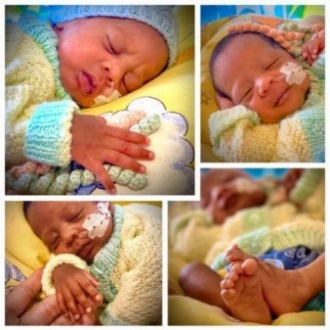
The little boy Al was born in Madagascar at just 29 weeks’ gestation, before his lungs had fully matured. He is the smallest and youngest premature baby that our partner hospital had treated up to that point. Initially, the doctors treating him did not hold out much hope that he would survive. He was on a ventilator for the first ten days of his life, then spent a further 15 days in the intensive care unit, and was subsequently monitored for another 15 days in the so-called intermediate care unit, before he was finally discharged home as a happy and healthy little boy. The hospital’s doctors call Al ‘our little success story of 2020’.