This page was translated automatically. The German original is binding. Read the German original

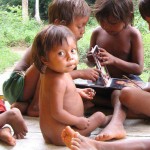
 Christina Haverkamp founded Yanomami-Hilfe e.V. to support the indigenous peoples of South America, in particular the Yanomami Indians in Brazil and Venezuela.
Source of text & photo: www.yanomami-hilfe.de
Since 2015, Tulisa has been in close contact with the German organisation YANOMAMI-HILFE e.V. (URL: www.yanomami-hilfe.de):
The aim is to improve the severely threatened health situation of the Yanomami people – and in particular the children – in the rainforest region of southern Venezuela. This aid organisation, founded in 2006 by Christina Haverkamp, has set itself the task, amongst other things, of organising and implementing health projects for the Yanomami people in Brazil and Venezuela. To this end, YANOMAMI-HILFE already operates two health centres in the rainforest and is planning to establish a third.
 The Yanomami are among the last indigenous peoples in South America still living in their traditional way of life. They live in the northern Brazilian Amazon region and in the headwaters of the Orinoco in southern Venezuela.
This endearing indigenous people still live in harmony with nature today and have preserved their unique culture, which is characterised by a distinctive communal way of life. The Yanomami subsist on hunting, fishing, bananas and cassava. Up to 300 Yanomami live in a so-called ‘maloca’, a circular village built from tree trunks and palm leaves.
Approximately 9,000 Yanomami live in the Brazilian rainforest, covering an area as large as Switzerland. The total number across Venezuela is estimated at more than 12,000 Yanomami.
They are one of the last indigenous peoples on Earth. Yet their way of life is under threat…
As can also be seen from recent press reports, the economic situation in Venezuela is currently absolutely dire due to political turmoil and the fall in oil prices (Venezuela derives 90 per cent of its national income from oil exports):
There is a shortage of foreign currency, meaning that the national health service lacks both sufficient medicines and adequate technical diagnostic and therapeutic equipment.
The health situation is all the more dire in the rainforest region on the border with Brazil, where the Yanomami live as an indigenous (largely overlooked) minority.
A doctor visits their remote villages at most once a year. Only 20 per cent of the Yanomami in Venezuela have access to medical care.
Serious illnesses such as malaria, tuberculosis, river blindness and numerous other infectious diseases pose a constant threat.
Children are particularly affected by this, especially as malnutrition becomes more widespread. That is why Tulisa wants to continue helping here!
In addition to medicines and vaccines, there is also a lack of the communication equipment – such as radio sets – necessary to maintain an effective health service. Without radio equipment, it is impossible to restock vital medicines or medical equipment, transfer emergency patients by boat or mission aircraft, or relay crucial epidemiological data or status reports.
Tulisa therefore supported YANOMAMI-HILFE in addressing this problem two years ago and co-funded five radio sets at a cost of €3,000.

If you care deeply about the Yanomami, please continue to support us with this project!